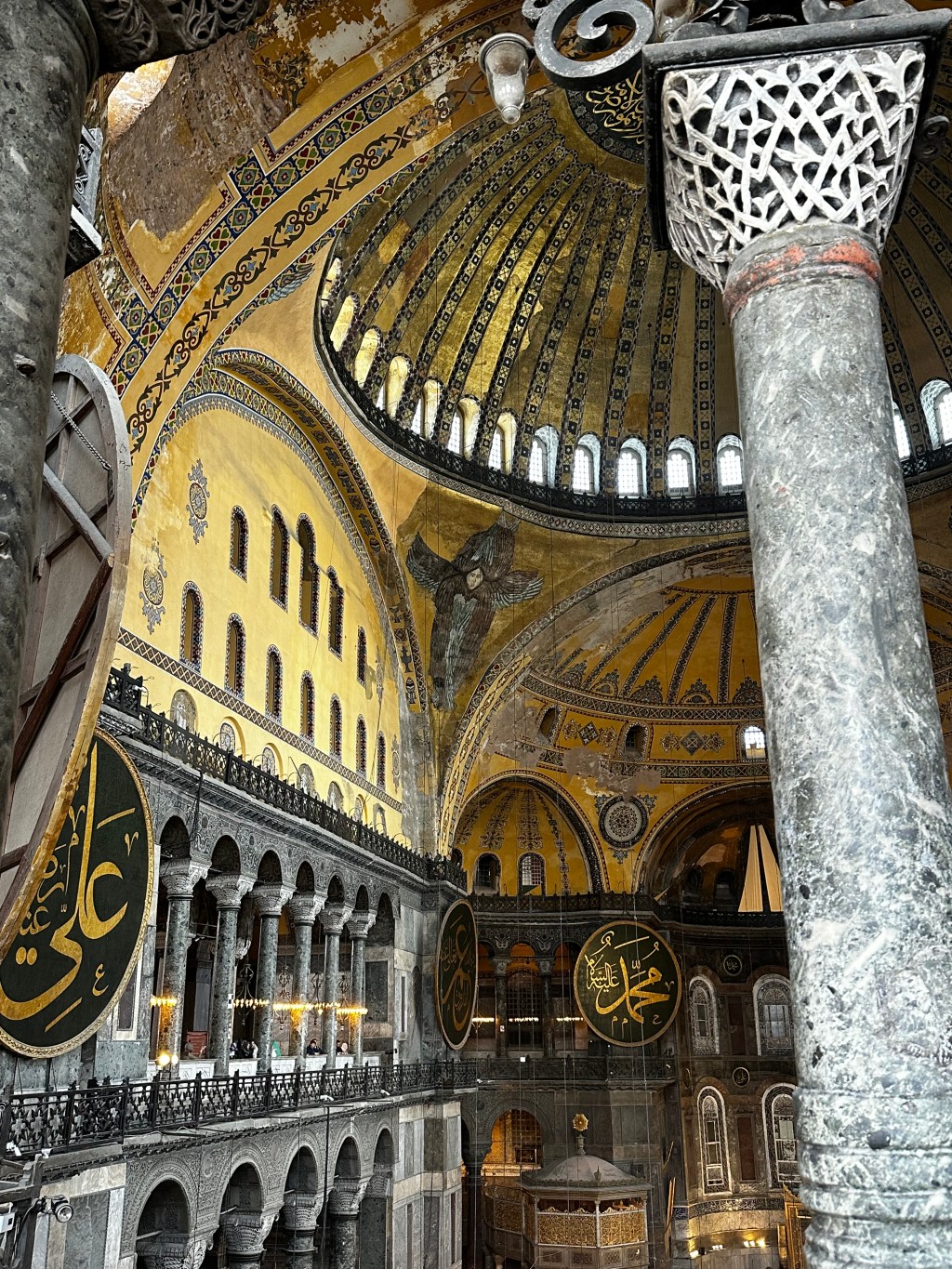
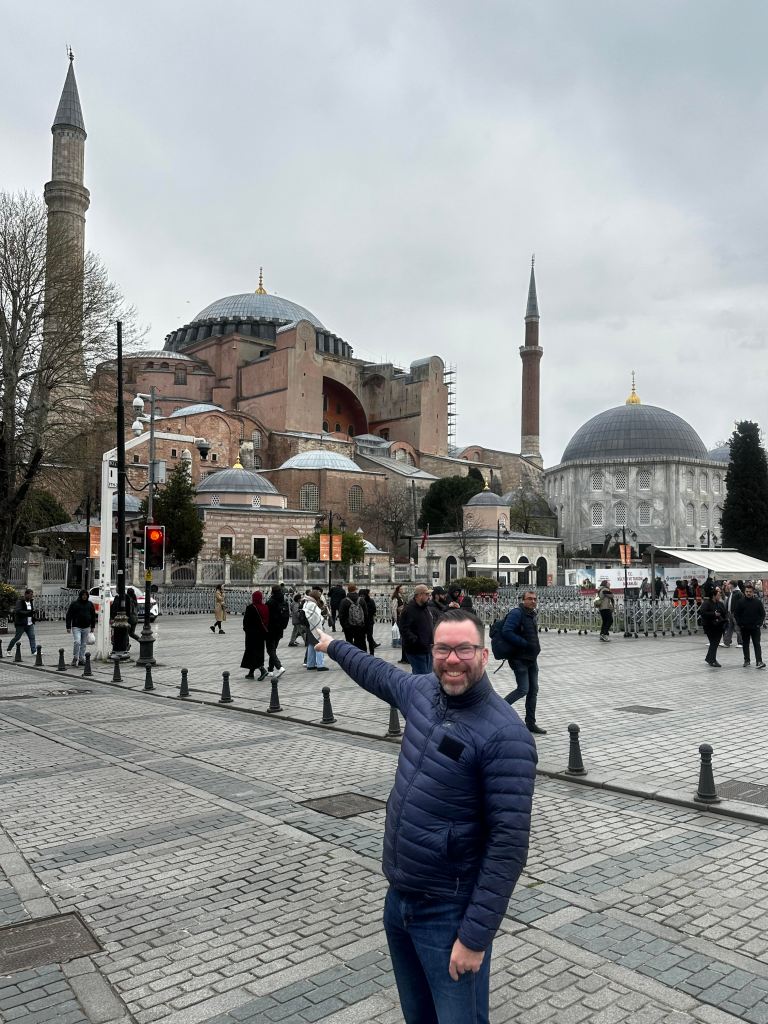
ISTANBUL, April 10, 2025 – Today, we visited the magnificent Hagia Sophia, a structure that has witnessed nearly 1,500 years of human history while adapting to the changing tides of empire, religion and culture.
Standing beneath its massive dome, I was struck by the multiple identities this building holds simultaneously: Byzantine church, Ottoman mosque, secular museum and now mosque again.
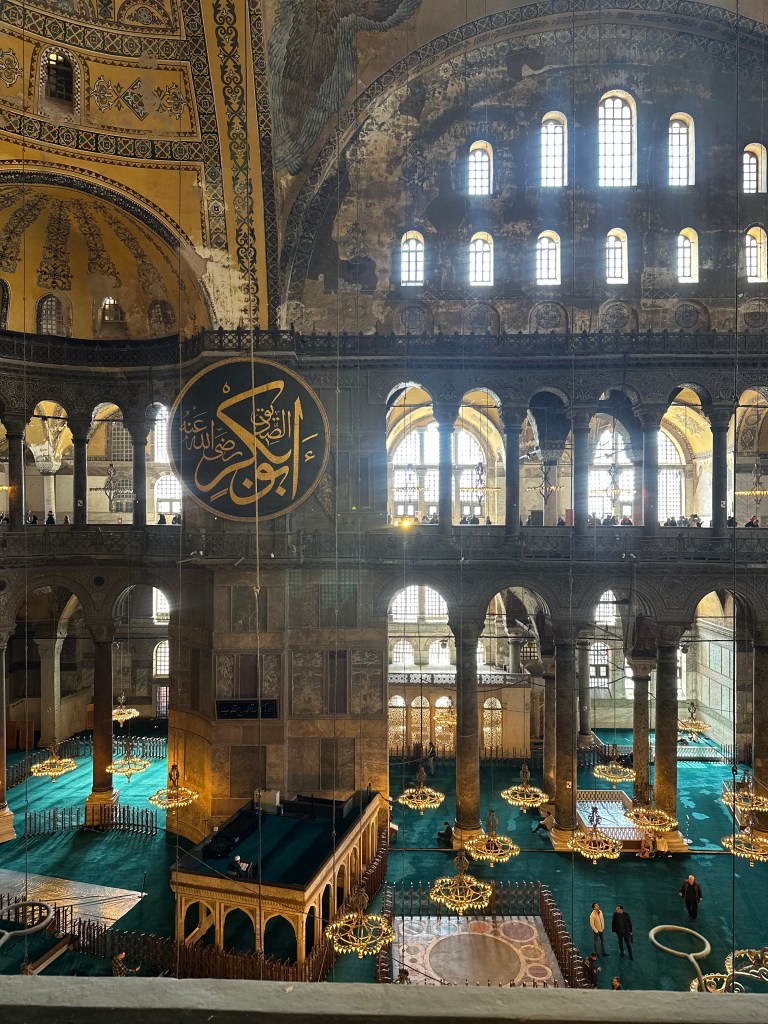
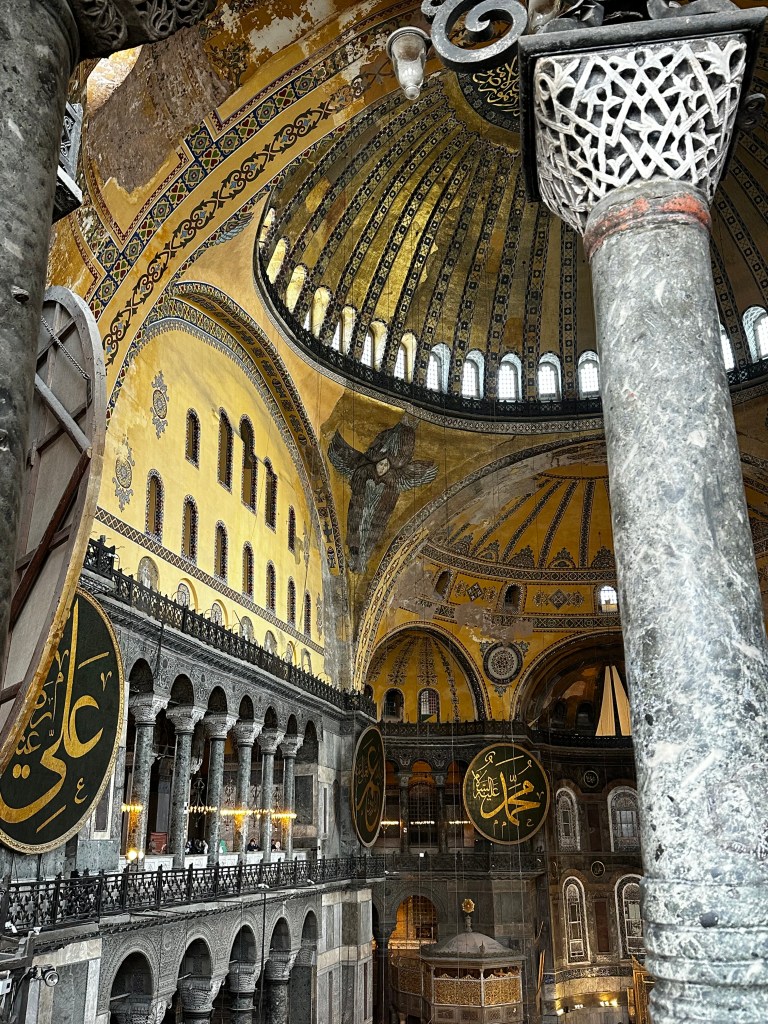
Hagia Sophia tells this story visually. Christian mosaics of Jesus and Mary share space with massive Islamic medallions bearing the names of Allah and Muhammad. Byzantine marble columns support Ottoman additions. Ancient Greek crosses peek through carefully preserved Islamic calligraphy. A beautiful complexity emerges when different traditions intertwine.
The building’s ingenious engineering is captivating; architects from the sixth century managed to create a vast domed space that has withstood earthquakes and time itself. The political history is represented in every corner, each architectural choice revealing something about the powers that controlled this sacred space throughout the centuries.
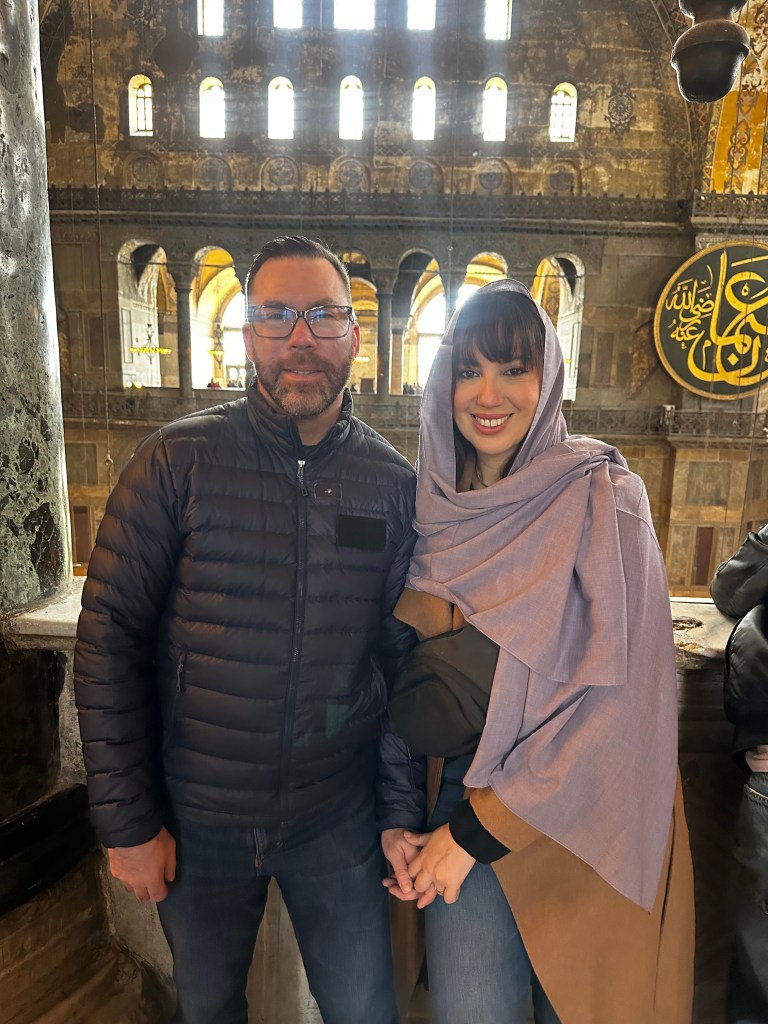
I had been there once before in 2014 when it was still a museum. Mustafa Kemal Atatürk, founder of modern Turkey, had converted it from a mosque to a museum in 1935 as part of his vision for a secular Turkish state. That decision allowed the building’s multilayered history to be equally honored and preserved for nearly a century. Walking through it now, five years after President Erdoğan’s controversial 2020 decree returned it to mosque status, I noticed how differently I experienced the space.
What strikes me most about Hagia Sophia isn’t its grandeur (though that’s undeniable) but its refusal to be just one thing. In a world that often demands we choose a single identity, there’s something profoundly moving about a space that says: I am all of these things, simultaneously.


 Heritage Homecoming
Leave a reply to From sultans to serenity – Heritage Homecoming Cancel reply