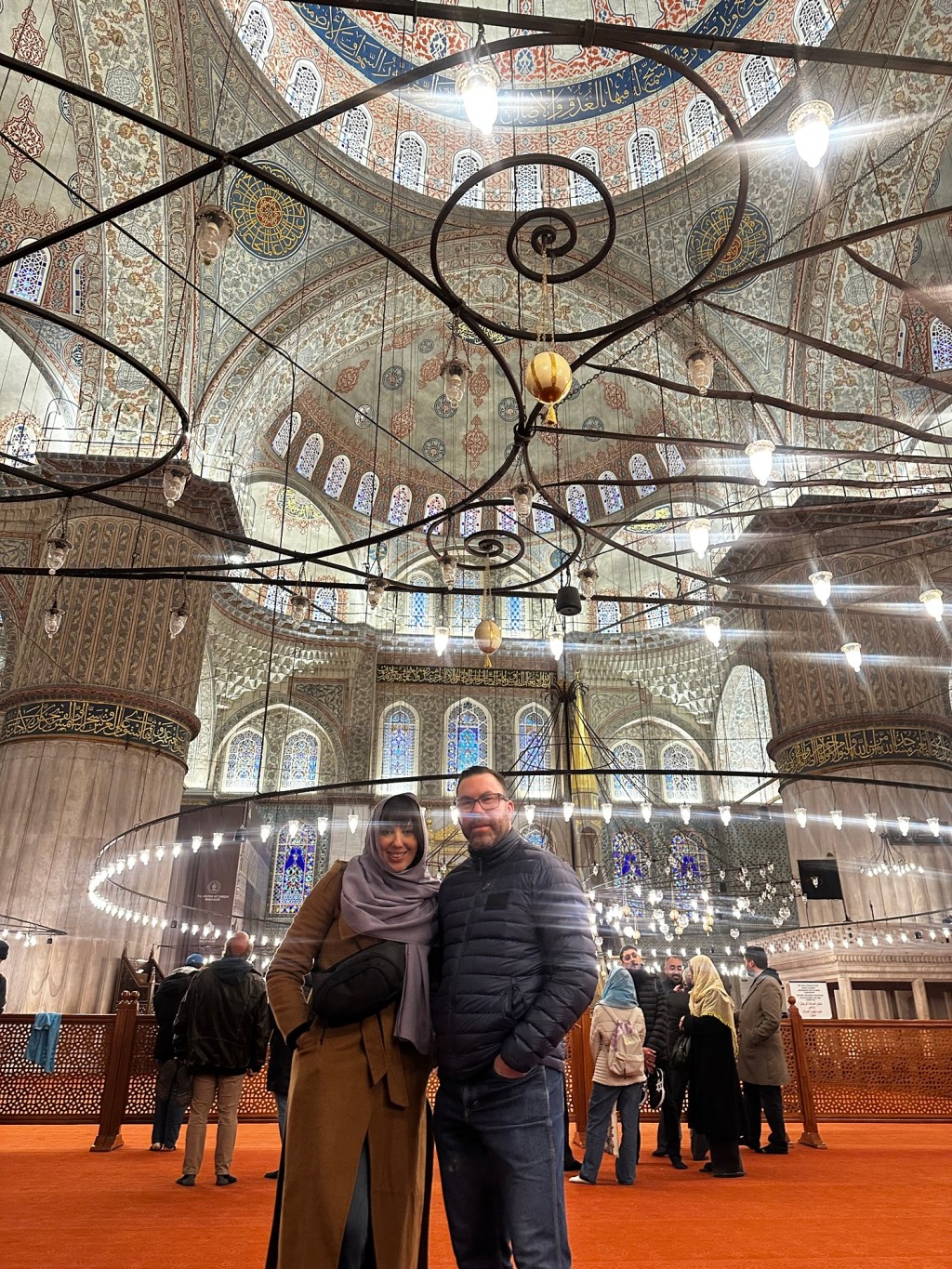
ISTANBUL – April 10, 2025. After immersing ourselves in the layered history of Hagia Sophia, our second day in Istanbul led us to two more iconic sites in the Sultanahmet district: Topkapi Palace and the Blue Mosque. Each monument offered a unique perspective on the city’s Ottoman heritage.
Topkapi Palace: the heart of an empire
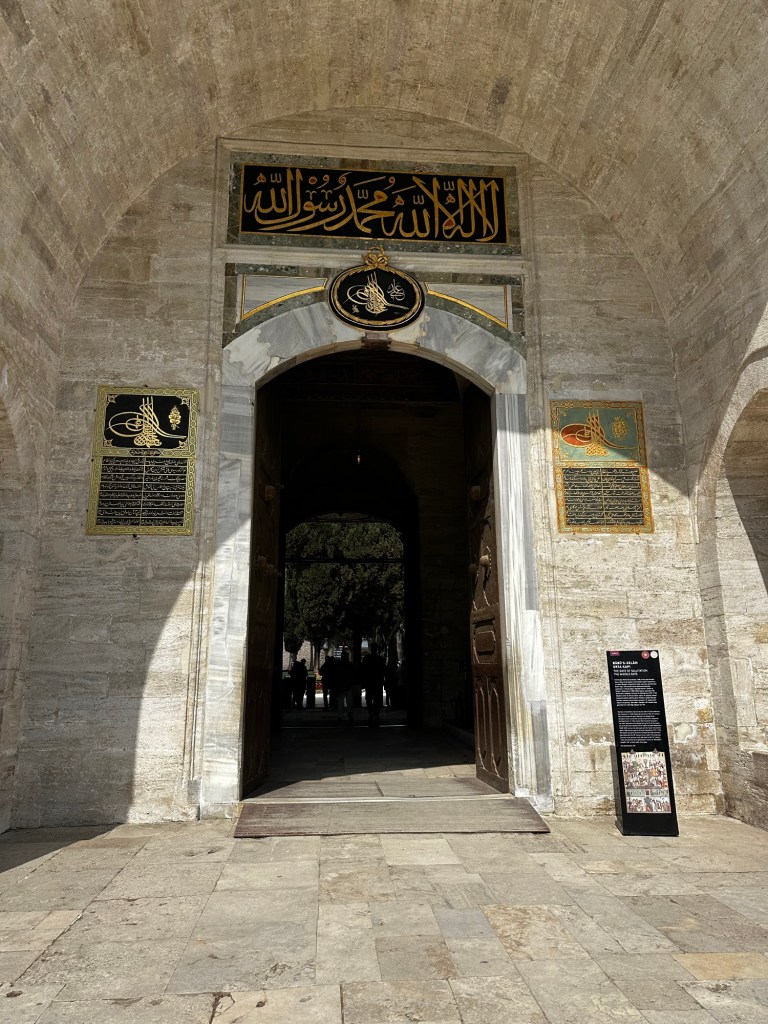
Our first stop was Topkapi Palace, the seat of Ottoman power for nearly 400 years. I had visited once before in 2014, and I’ve been waiting to share this experience with Nat. As we passed through the Imperial Gate, the palace complex unfurled before us, a testament to the grandeur and opulence of the Ottoman dynasty.
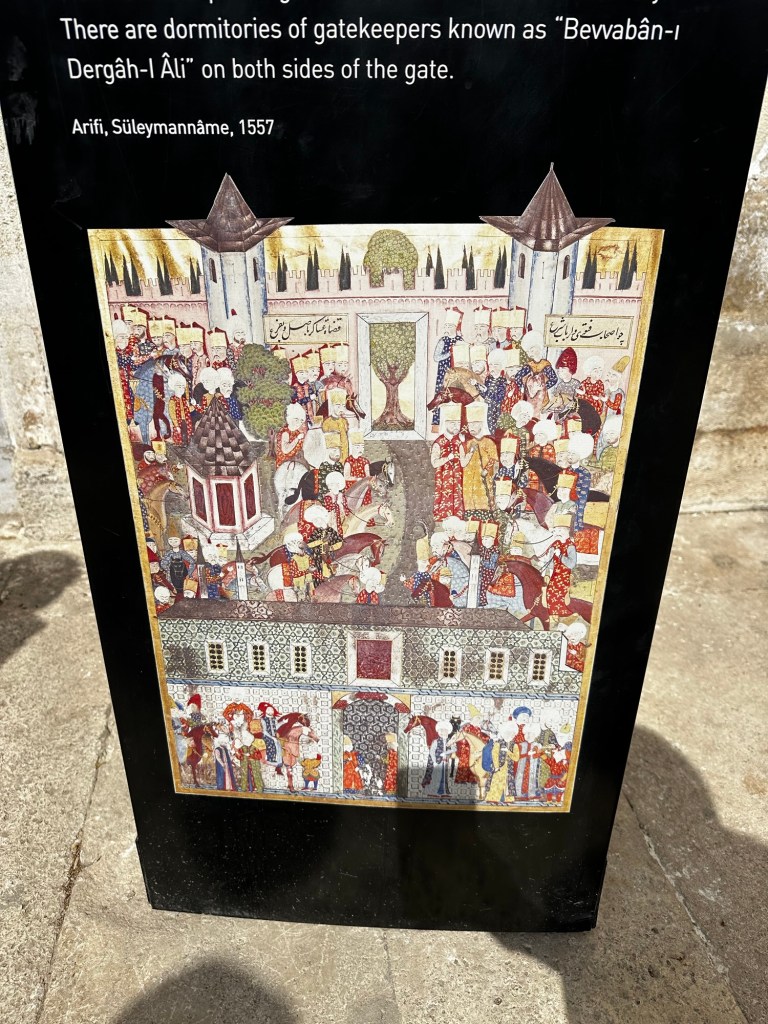
The first courtyard, known as the Court of the Janissaries, was once the domain of the sultan’s elite soldiers. As I was explaining to Nat how the Janissaries were young Christian boys taken from their families, converted to Islam, and trained as soldiers, it dawned on me how this part of history was taught in my own upbringing.
In my education, the Janissaries were portrayed as a formidable military force crucial to the Ottoman Empire’s expansion, while the troubling aspects of the practice were glossed over. This reverent narrative, lacking critical reflection, is likely still prevalent in many countries. A sobering reminder to approach history with a critical and nuanced perspective and how historical narratives can be shaped and politicized.
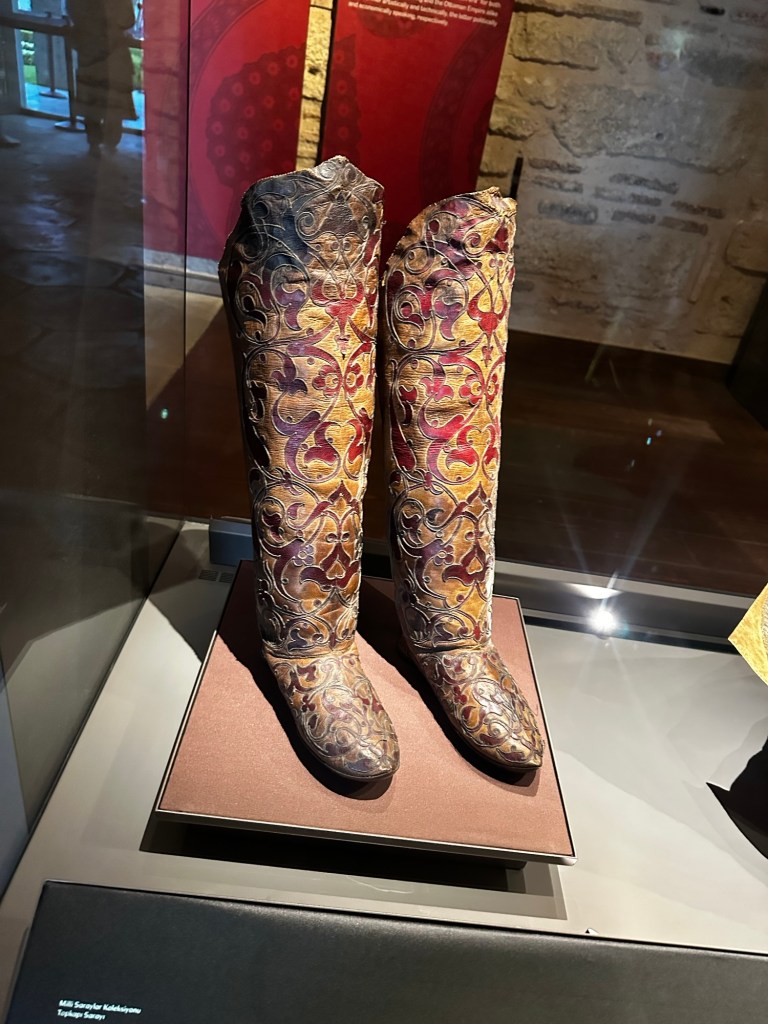
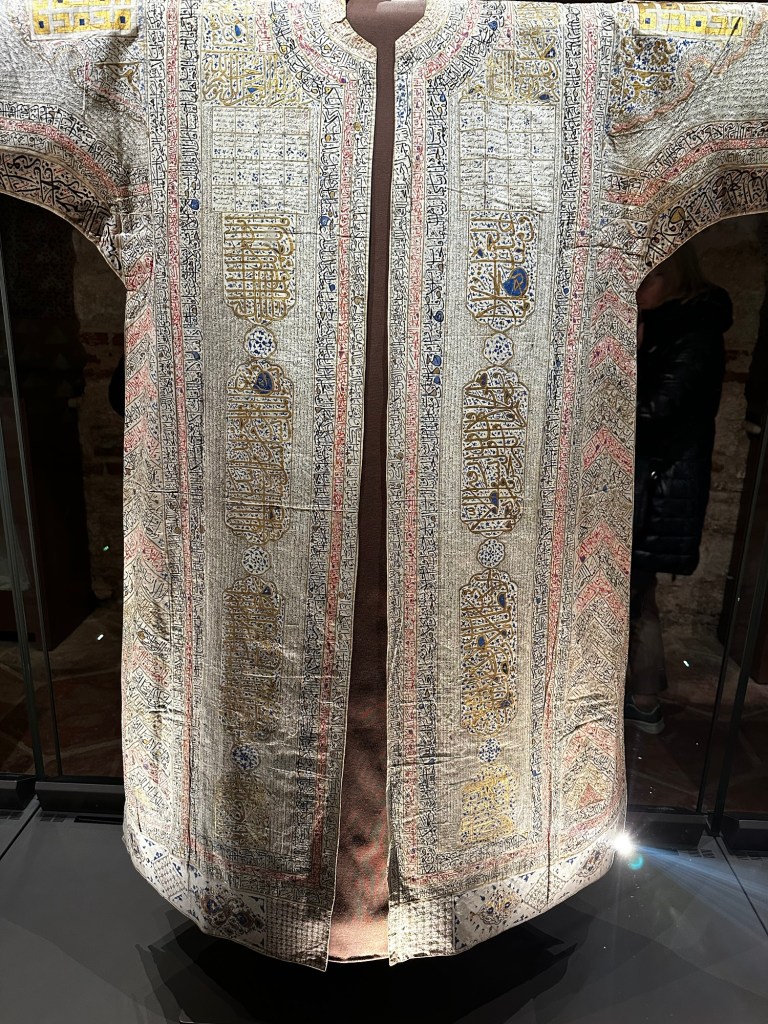
In the palace’s Treasury, we marveled at the glittering spoils of empire: jewel-encrusted swords and intricate armor. Each piece seemed to hold a story, a glimpse into the lives and aspirations of those who once wielded them.
The palace library, with its ancient manuscripts adorned with elegant Arabic calligraphy, was my favorite from my previous visit. I distinctly remember the blue color of the tile art. It reminded me of the Ottoman Empire’s linguistic legacy. Until 1928, Turkish was written using a version of the Arabic script known as Ottoman Turkish.
The opulent halls and tranquil courtyards of Topkapi Palace stood in stark contrast to the European-influenced design of Dolmabahçe Palace, which we visited yesterday. While Dolmabahçe reflected the Ottoman Empire’s later Westernization efforts, Topkapi embodied the height of traditional Ottoman power and style.
The Blue Mosque: a masterpiece of serenity
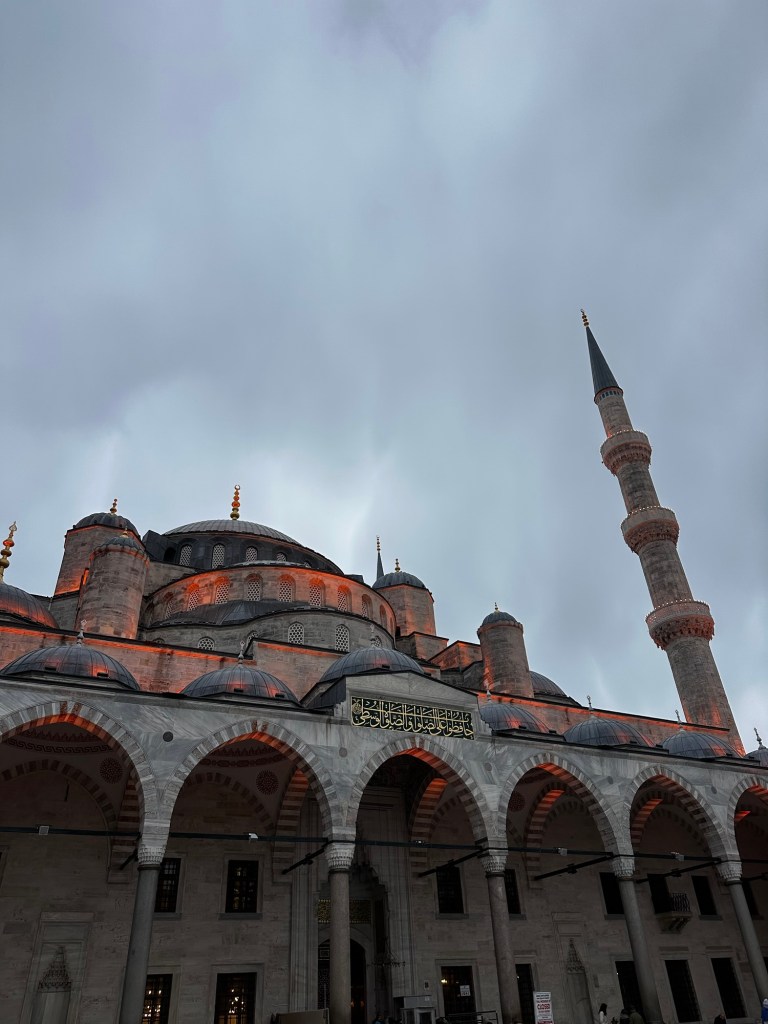
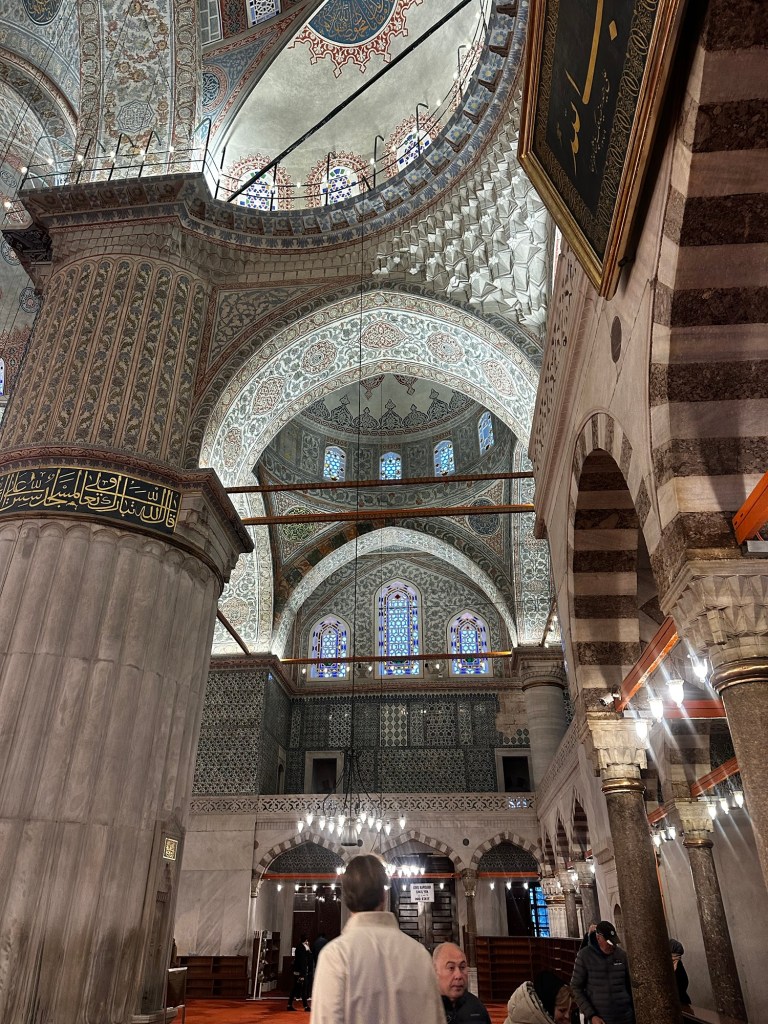
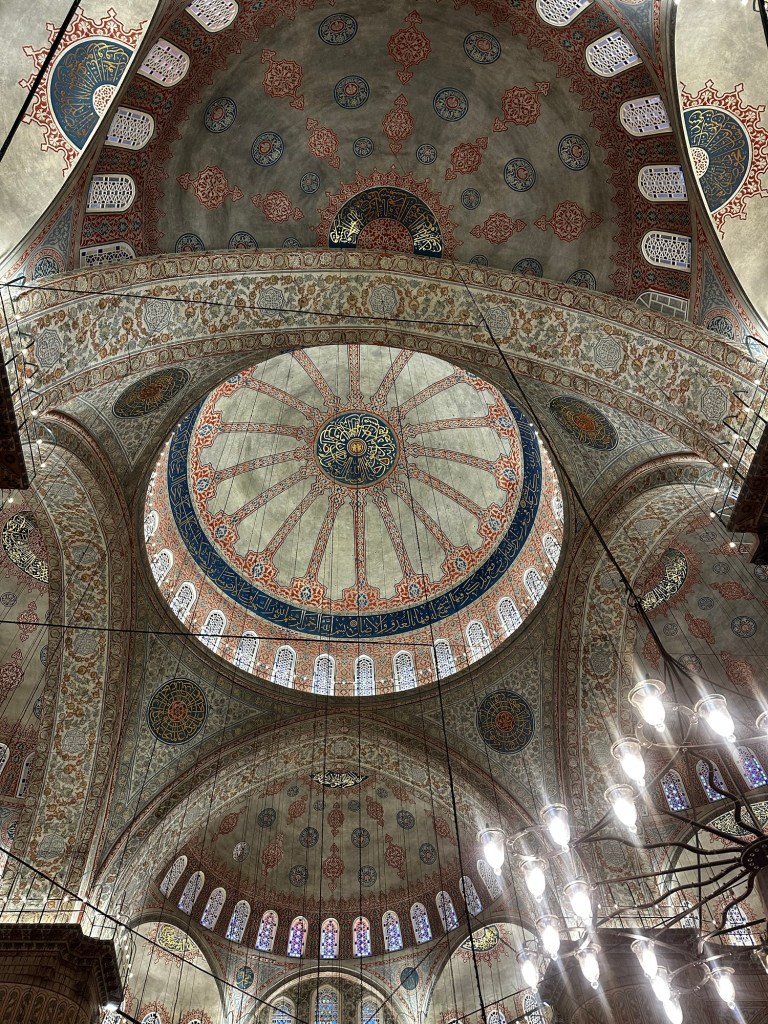
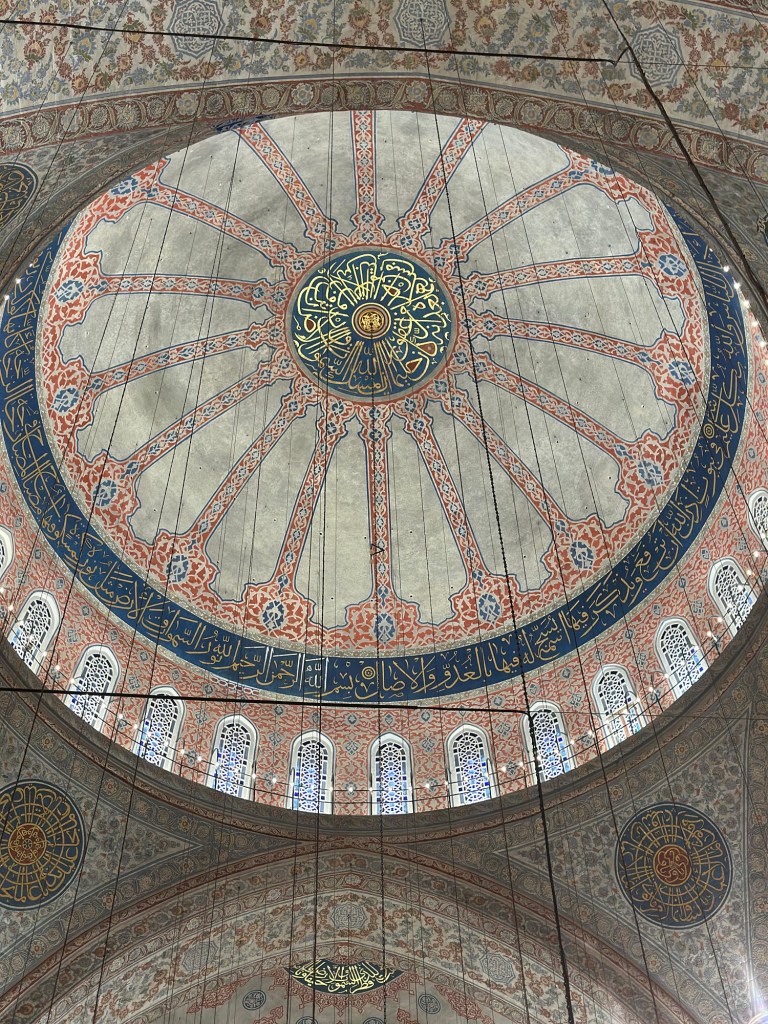
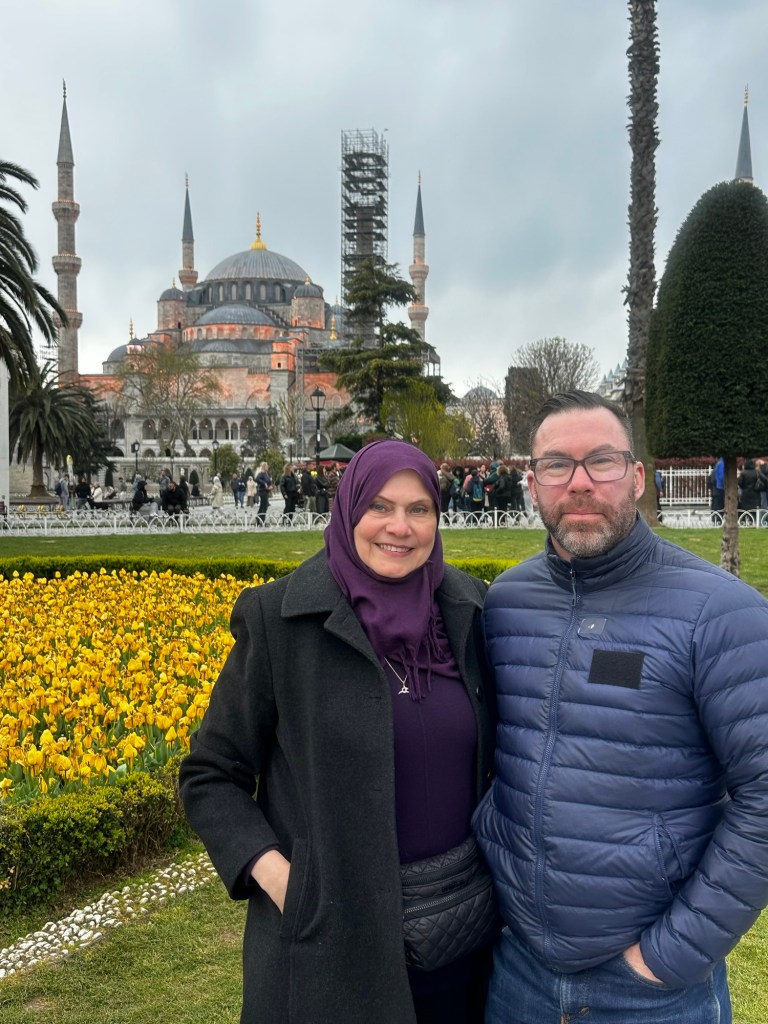
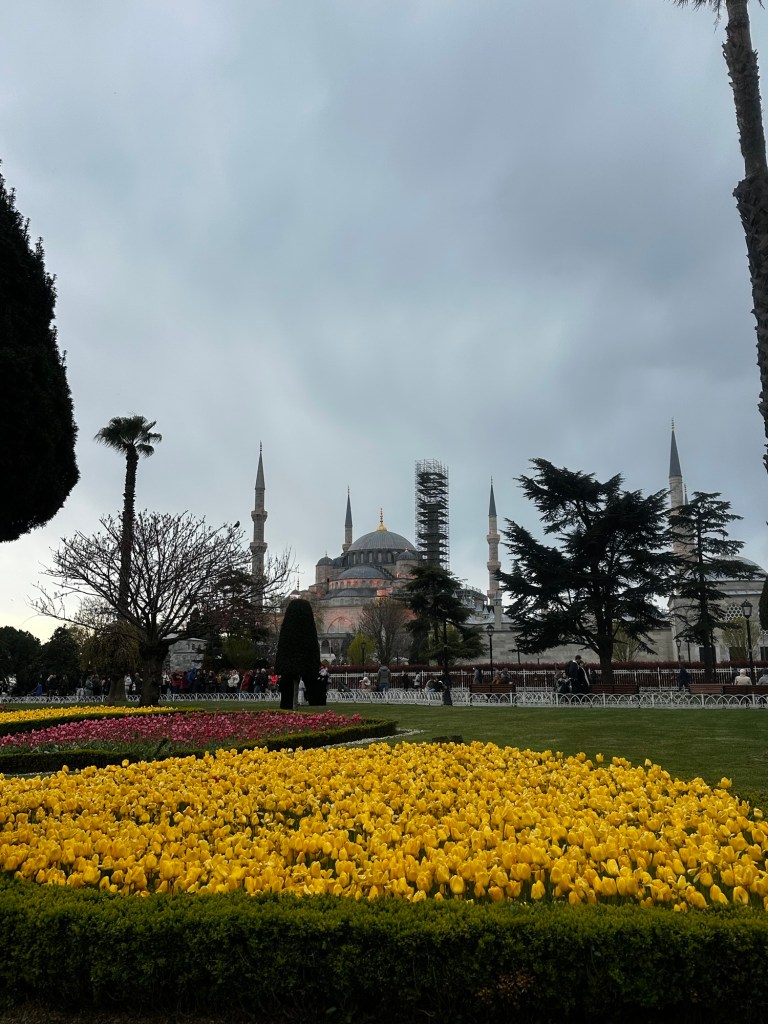
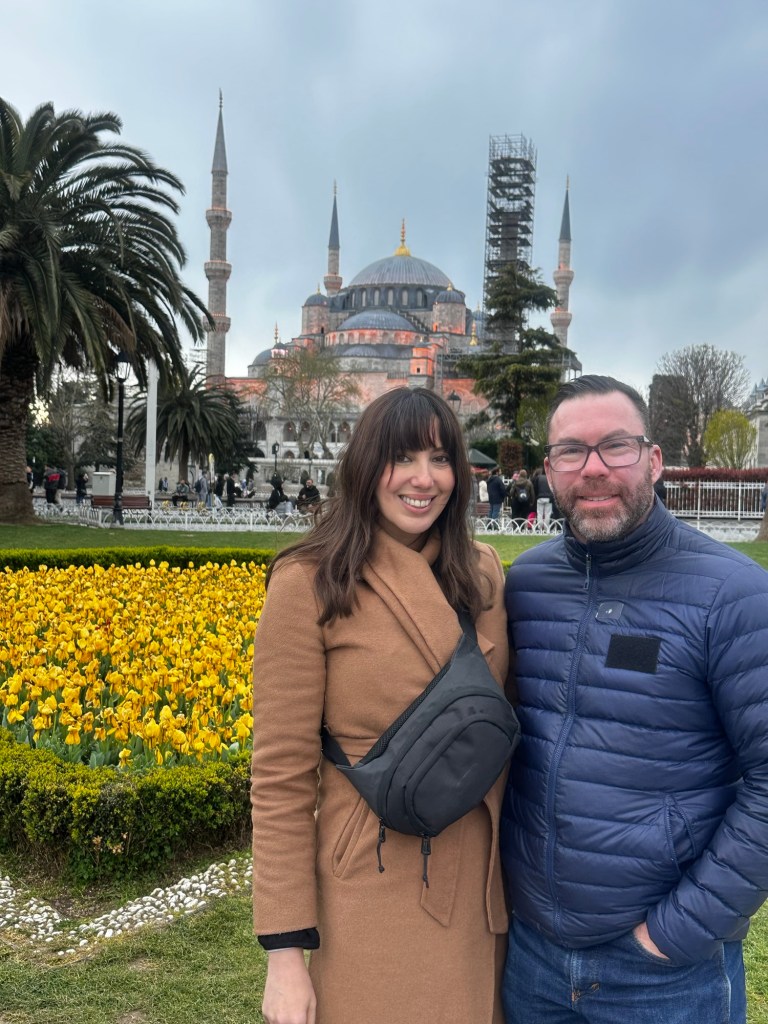
Next, we made our way to the Sultan Ahmed Mosque, popularly known as the Blue Mosque. Built in the early 17th century, this architectural marvel is renowned for its cascading domes, slender minarets, and the thousands of blue Iznik tiles that adorn its interior.
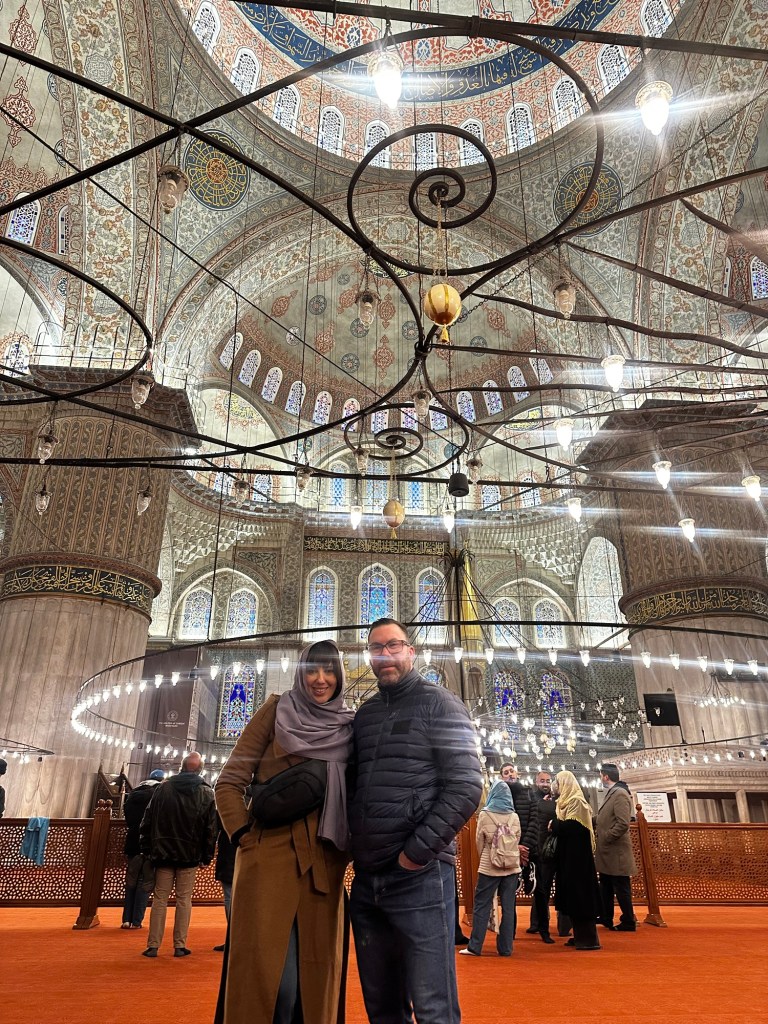
As we entered the mosque’s courtyard, the sense of harmony and balance in its design was striking. Inside, the soaring space was suffused with a soft, ethereal light, filtering through stained-glass windows and playing off the lush carpets beneath our feet.
In the stillness of the mosque, broken only by the soft murmur of prayer, the outside world seemed to fall away, replaced by a profound sense of tranquility. It was a testament to the enduring power of sacred spaces to offer solace and inspiration.
Threads of history, woven together
Stepping out into Sultanahmet Square, the interconnectedness of these three monuments – Hagia Sophia, Topkapi Palace, and the Blue Mosque – became apparent. Each represented a different thread in the rich tapestry of Istanbul’s history.
Topkapi Palace, with its opulent architecture and vast collection of treasures, embodied the political might and cultural sophistication of the Ottoman Empire at its peak. The Blue Mosque, with its serene beauty and spiritual resonance, spoke to the enduring role of faith in shaping the city’s identity.
Together, these sites told a story of a city at the crossroads, where empires, religions, and cultures have met, mingled, and left their indelible marks. They invited us to contemplate the complex web of influences that have shaped Istanbul over the centuries and to marvel at the human capacity for creation, expression, and belief, even as they reminded us of the darker aspects of history that we must grapple with and learn from.
 Heritage Homecoming
Leave a comment