
ISTANBUL, April 9, 2025 – Fighting through jet lag’s foggy haze after just two hours of sleep, I gratefully accepted baba’s strong coffee to prepare for the day ahead. My pre-trip, un-jetlagged self had ambitiously mapped out a packed itinerary to maximize our short stay. The adventure began as Nat, mom and I set out from Beylikdüzü toward Istanbul’s historic center. What should have been a simple 18-mile trip stretched into a 90-minute crawl through notorious traffic, giving us our first authentic taste of local Istanbul life.
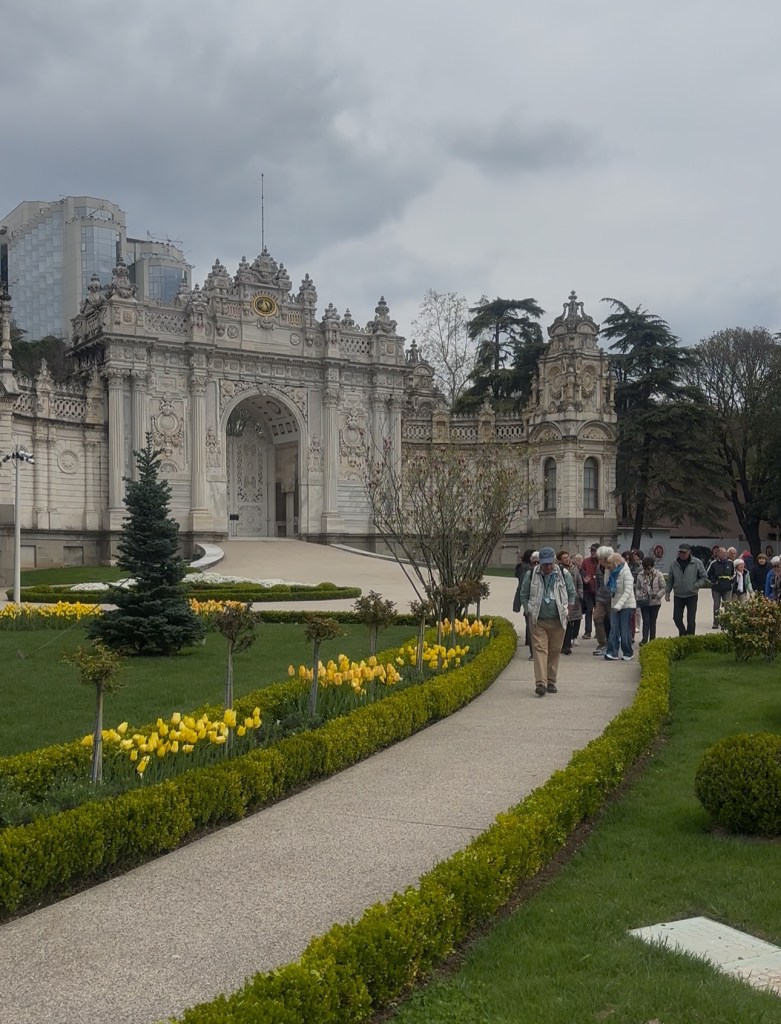
Our first destination: Dolmabahçe Palace, commissioned by Sultan Abdulmejid I in 1843. Having visited Topkapi Palace in 2014, I was immediately struck by the contrast. Where Topkapi embraced traditional Ottoman design, Dolmabahçe showcased the court’s newfound taste for European luxury.
Rain chased us inside to discover overwhelming opulence. I stood mesmerized beneath the world’s largest Bohemian crystal chandelier, Queen Victoria’s 4.5-ton gift illuminated by 750 lamps. “Let me guess,” Nat whispered as we wandered through gilded room after room, “another place royalty would receive esteemed guests?”
Contrasting the palace’s lavish chambers, I felt a quiet resonance in Ataturk’s bedroom, preserved exactly as it was when he died there in 1938. The clock frozen at 9:05 marking his death felt strangely intimate amid such grandeur.
While most rooms showcased public ceremonial spaces, the harem quarters revealed a different side of palace life. These weren’t simply the sultan’s brothel as often misrepresented. From the Arabic word “haram” meaning sacred or forbidden, this private family area housed the sultan’s mother, wives, children and female relatives, along with their servants. It functioned as the royal family’s private residence, strictly separated from public areas and governed by its own complex social hierarchy.
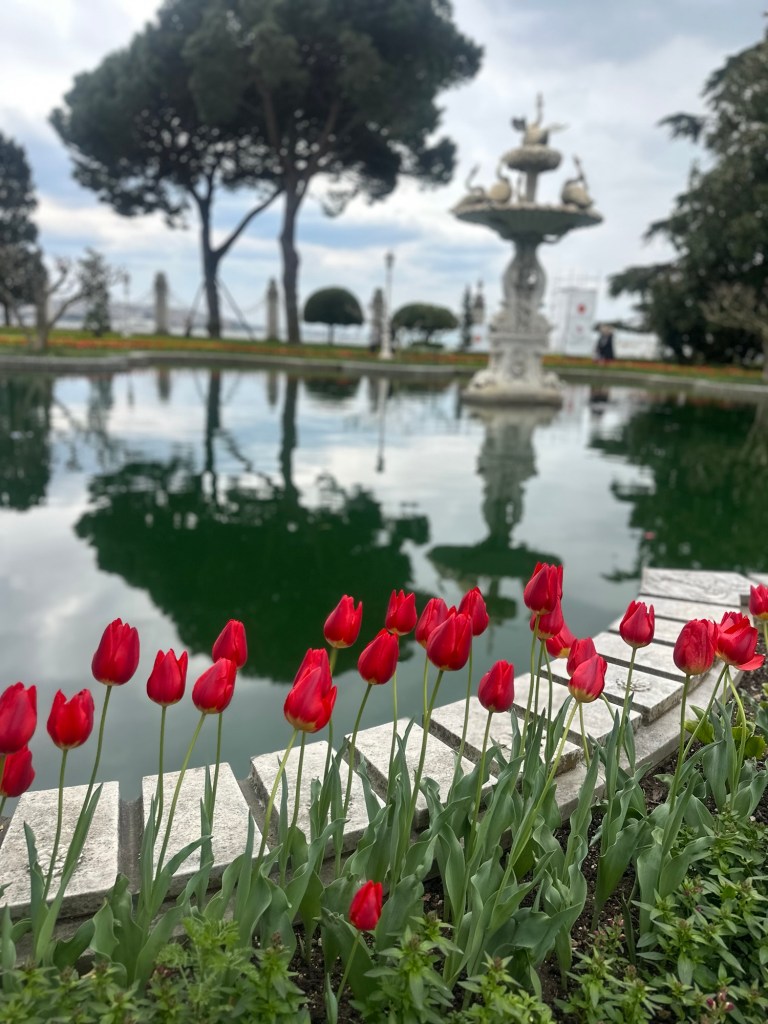
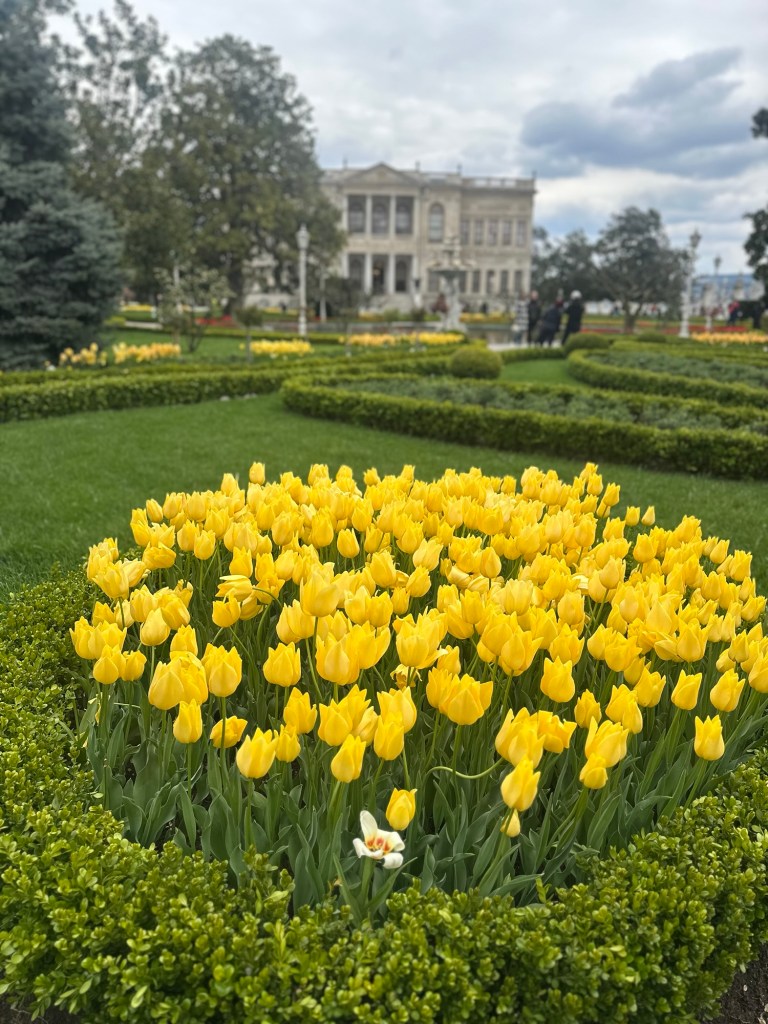
When the rain finally stopped, we wandered gardens bursting with tulips. Tulips, I later learned, originated in Central Asia and became significant during the Ottoman Empire, especially in the 18th century during what’s known as the “Tulip Period” (Lale Devri). Tulips symbolize paradise on earth in Turkish culture. In Islamic art, they represent Allah, with the Turkish word for tulip (lale) having the same letters as Allah when written in Arabic. Sultan Ahmed III (1703-1730) had thousands of tulip bulbs imported and planted throughout the empire. During this time, cultivating the perfect tulip became an art form and status symbol among the elite.
From the waterfront terraces, we watched boats slicing through the Bosphorus below, connecting two continents with each crossing. “Ready to join them?” I asked Nat and my mom, as we headed for Eminonu pier.
Stay tuned for part two of our first Istanbul day, where we’ll sail between two continents on the iconic Bosphorus strait.


 Heritage Homecoming
Leave a comment